
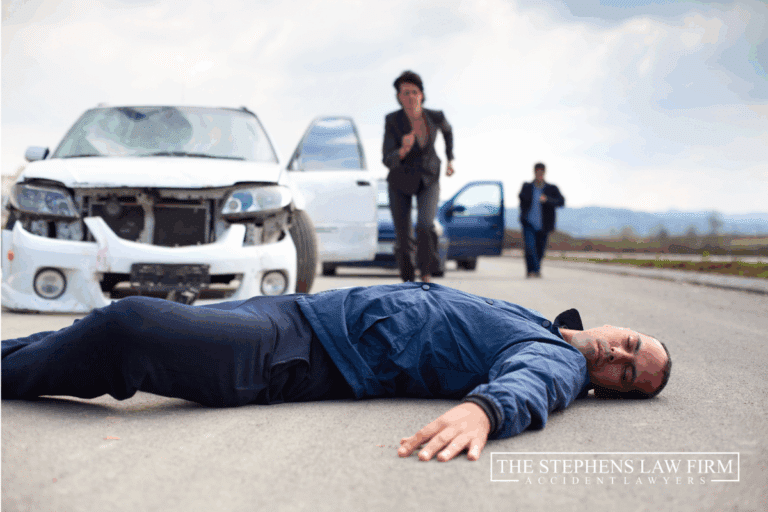
Liability after a pedestrian accident in Texas usually depends on who acted negligently, whether that be drivers, pedestrians, or third parties responsible for road design or maintenance. Since Texas follows a modified comparative fault rule, determining fault is rarely straightforward. Under this rule, your right to compensation can be reduced or eliminated depending on your contribution to the incident.
As a trusted Houston pedestrian accident lawyer, Joe Stephens helps injured Texans fight back against unfair blame and recover the compensation they deserve. With over 40 years of experience and a reputation for standing up to powerful insurance companies, Joe and The Stephens Law Firm provide the personal attention and legal skill you need after a devastating crash anywhere in Texas.
- Liability in a Texas pedestrian accident depends on the facts of the case and may extend beyond the driver to include pedestrians, employers, vehicle owners, or government entities.
- Texas follows a modified comparative negligence rule, meaning injured pedestrians may still recover compensation if they are 50% or less at fault, though their award will be reduced.
- Strong evidence is critical to proving fault and countering insurance company arguments that the pedestrian caused the accident.
Who Can Be Held Liable After a Pedestrian Accident in Texas?
In a pedestrian accident, liability generally rests with the party whose negligence caused the accident; however, it is not always limited to the driver. Attorneys can challenge these common assumptions and examine the underlying facts of a case. Several different parties could be held wholly or partially at fault for a vehicle-pedestrian crash, including:
- Drivers: If a driver were texting at the time of the incident and did not see a pedestrian in a crosswalk, the driver may be held liable for any resulting injuries
- Pedestrians: A pedestrian may share responsibility if they had crossed outside a designated crosswalk, ignored traffic signals, or entered the roadway unexpectedly
- Employers: If the at-fault driver was acting within the scope of their employment at the time of the crash, their employer may also be held responsible for the resulting damages
- Vehicle owners: A vehicle owner may be liable if they negligently entrust their vehicle to an unqualified or impaired driver
- Government entities: A city, county, or state agency may be partially liable if hazardous road conditions, malfunctioning traffic signals, or poor roadway design contributed to the collision
Does It Matter Whether the Pedestrian Was in a Crosswalk?
Many people believe that a driver is automatically liable if a pedestrian is in a crosswalk, or that a pedestrian is at fault for crossing outside a crosswalk. However, liability depends on the specific circumstances of the accident and whether either party acted negligently.
While a pedestrian’s location within a crosswalk at the time of the incident can affect liability, it is unlikely to be the sole deciding factor. Texas has laws in place to protect the right-of-way of pedestrians in different types of scenarios:
- Marked crosswalks: Drivers must stop and yield to pedestrians lawfully crossing in a crosswalk when required under Texas law, including when no traffic signal is in place or operating and the pedestrian is on the driver’s half of the roadway or close enough to be in danger.
- Unmarked crosswalks: Pedestrians may also have right-of-way in an unmarked crosswalk at an intersection, depending on traffic signals, the pedestrian’s location, and whether both parties acted reasonably.
- Crossing outside a crosswalk: Pedestrians crossing outside a marked crosswalk or unmarked crosswalk at an intersection must generally yield to vehicles, though drivers still have a duty to use due care to avoid collisions.
Liability depends on the actions of everyone involved, including whether the driver or pedestrian followed traffic laws, remained attentive, and acted reasonably under the circumstances.

Pedestrian accidents often cause serious injuries—and serious financial stress. Attorney Joe Stephens works hard to make sure you’re not left carrying the cost of someone else’s mistake.
Can a Pedestrian Be Partially Responsible for the Accident?
There are circumstances under Texas law in which a pedestrian can be held partially liable for an accident. Some common causes of accidents where partial fault may fall on the pedestrian include the following:
- Crossing outside a marked or unmarked crosswalk when it is unsafe to do so
- Entering the roadway suddenly, leaving a driver with little or no time to stop
- Ignoring pedestrian signals or traffic control devices
- Walking while distracted, such as texting or wearing headphones that limit awareness
- Crossing against a red light or stop signal
- Walking while impaired by alcohol or drugs
- Failing to yield the right-of-way
Keep in mind that sharing some responsibility does not automatically prevent someone from pursuing compensation. This is because of the state’s comparative negligence laws, which we will examine below.
How Does Texas’s Modified Comparative Negligence Rule Affect Liability?
Texas uses a modified comparative negligence rule to navigate shared fault in accident cases. Under this system, an injured pedestrian may recover compensation as long as they are not more than 50% at fault for the crash. However, any compensation awarded is reduced by the pedestrian’s percentage of fault.
For example, if a pedestrian is awarded $100,000 in damages but is found to be 20% at fault, their recovery would be reduced to $80,000. If the pedestrian is found to be 51% or more at fault, they would likely be barred from recovering damages under Texas law.
Fault percentages are often disputed in these cases. Insurance companies may argue that a pedestrian bears a greater share of responsibility in order to reduce or deny a claim. However, an insurer’s determination is not final. The strength of evidence and your attorney’s negotiation skills will play a vital role in the outcome of a case.
What Evidence Is Used To Determine Fault After a Pedestrian Accident?
Several different factors go into determining fault after a pedestrian accident. The greatest indicator of whether you have a successful claim is the strength of your evidence. Strong, compelling evidence can fully reflect what took place and the other party’s role in your injuries. Some examples of common types of evidence your attorney may collect include:
- Official reports
- Video footage
- Witness testimony
- Physical evidence
- Expert analysis
In situations where evidence is limited, such as accidents with no witnesses or surveillance footage, determining fault can be more challenging. Insurers, police, and attorneys may rely on sources such as police reports, vehicle damage, medical records, and statements from the driver and the pedestrian to evaluate what happened.
What if the Driver or Insurance Company Says the Pedestrian Was at Fault?
Even when the driver’s fault seems obvious, insurers may still attempt to challenge it and argue that the pedestrian caused or contributed to the accident. This is often done by stating the pedestrian was distracted, crossed outside a crosswalk, ignored traffic signals, or unexpectedly entered the roadway.
By partnering with a skilled lawyer, you can push back against wrongful accusations and tactics that undermine a claim. Your legal advocate can use evidence to present a more complete picture of how the collision occurred.
Recovering Compensation With Little or No Insurance
An attorney can also navigate cases involving drivers with little or no insurance. Depending on the circumstances, recovery may still be available through uninsured or underinsured motorist coverage or other applicable insurance policies.
Similarly, if an insurance company wrongfully denies a claim or disputes liability, a lawyer can negotiate on your behalf and, when appropriate, pursue litigation to seek the compensation you deserve.
Get Answers About Liability After a Texas Pedestrian Accident
If you or your loved one has been injured in a pedestrian accident, do not wait to get the legal support you need from a dedicated Texas attorney. Joe Stephens is a double board-certified lawyer with over 40 years of experience handling complex cases across Texas’s legal landscape. Our firm offers free consultations and personalized representation. Call us today at (281)-201-0035 to get started with pursuing fair compensation for your injuries.


