- A small number of Houston intersections account for a disproportionate share of serious crashes, many of them in corridors familiar to west Houston and Katy-area drivers.
- Houston’s road design creates conditions that make intersection crashes more likely and more severe due to wide lanes, feeder roads, and no red-light cameras.
- Texas’s proportionate responsibility law means insurance companies will work to shift blame onto you after an intersection crash. Having an experienced attorney in your corner from the start can make a significant difference in what you recover.
Houston’s freeways get most of the attention, but intersection accidents account for roughly 40% of all traffic collisions in the city. These crashes are often the most violent, as there are vehicles moving in different directions at the same moment. This article identifies which intersections have the highest crash rates, explains why they stay dangerous, and covers what Houston drivers need to know legally if they’re hurt at one.
Why Houston Intersections Are Especially Dangerous
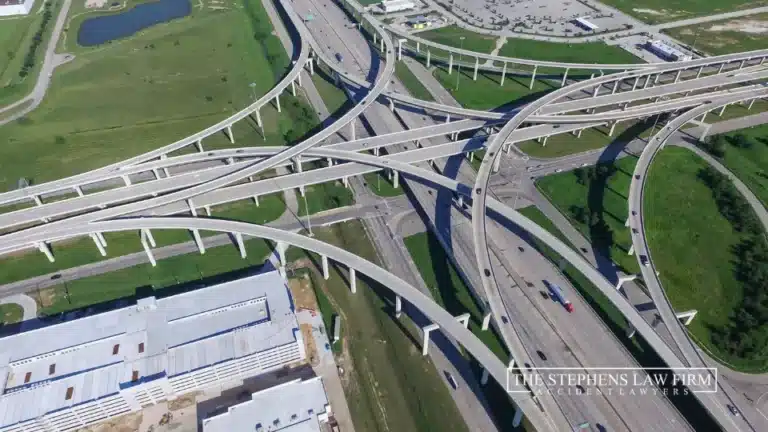
Houston’s intersection problem runs deeper than traffic volume — it starts with road design. Streets like Bissonnet, Westheimer, and FM 1960 move traffic at near-highway speeds while lined with commercial driveways, bus stops, and pedestrian crossings. Urban planners call these “stroads,” roads designed to function as both a street and a highway that end up doing neither safely.
Houston’s feeder roads make it worse. Service roads let drivers exit a freeway and immediately interact with cross-traffic and pedestrians at speeds that don’t mix. This setup is rare in most American cities, and it creates collision patterns that repeat across the metro.
Houston’s Red-Light Camera Ban
There’s also a Texas-specific factor, the 2019 statewide ban on red-light cameras (HB 1631). Houston had already removed its cameras in 2011, and afterward, HPD data showed fatal intersection crashes rose 30% and overall crashes rose 116%. Without automated enforcement, red-light running at high-risk intersections goes largely undetected. See Texas proportionate responsibility law for how this affects fault in crash cases.
Houston’s Most Dangerous Intersections
Crash data from the Texas Department of Transportation and the Houston Police Department consistently identifies the same locations year after year. Here’s what the data shows, and why these spots stay on the list.
Bissonnet Street and Beltway 8 (Sam Houston Tollway)
Consistently ranked as one of the city’s highest-crash locations by TxDOT crash data, Bissonnet is a textbook stroad, fast-moving traffic sharing space with shopping centers, apartment complexes, and pedestrians who must cross high-speed lanes on foot. Drivers turning into retail lots create constant T-bone and rear-end setups, and pedestrian accidents here are among the highest in the city.
FM 1960 and West Lake Houston Parkway
A primary artery for northeast Houston commuters that also carries heavy commercial truck traffic. Rapid suburban growth has outpaced the infrastructure, and frequent lane changes toward storefronts produce a steady rate of multi-vehicle pile-ups. When 18-wheelers are involved in intersection crashes, injuries are often catastrophic and liability can reach beyond the driver to the trucking company.
Pease Street and Fannin Street (Downtown)
A University of Houston study identified this as the city’s highest-crash intersection during its study period, with 59 reported crashes. One-way streets, GPS-distracted drivers, and dense pedestrian traffic all contribute. Many Houston drivers don’t realize that under Texas law, every intersection, marked or not, is a legal crosswalk, and failure to yield to pedestrians is a primary cause of accidents here.
Westheimer Road and South Gessner Road
Multiple lanes in each direction, short signal cycles, and inadequate crosswalk markings despite heavy foot traffic. Speeding to beat the yellow-to-red transition is a documented pattern here, and without red-light cameras, it goes largely unmonitored. Heavy pedestrian activity near bus stops increases risk, particularly for distracted driving accidents involving people on foot.
Other High-Risk Locations
Several additional intersections appear repeatedly in HPD crash reports and TxDOT data:
- Bissonnet Street & Wilcrest Drive: high pedestrian accident rate, poor lighting, frequent speeding
- Long Point Road & Gessner Road: heavy commercial activity, frequent illegal turns and U-turns
- Bellaire Boulevard & South Gessner: flagged by LINK Houston for pedestrian danger; a significant share of nearby families lack vehicle access, meaning more foot traffic crossing high-speed lanes
- Highway 6 at Westheimer: poor signal timing contributes to an elevated crash rate
- Beltway 8 & Genoa-Red Bluff Road: a wider-than-average intersection requiring more time to cross, which increases the margin for error
What Houston Is Doing and What’s Still Not Working
Houston launched its Vision Zero Action Plan with the goal of eliminating traffic deaths by 2030. The plan focuses on safety improvements on the 6% of streets that account for 60% of serious injuries and deaths. This is a targeted approach that, in theory, could have a significant impact without requiring a full infrastructure overhaul.
In practice, the program has stalled. As of 2024, Houston recorded its highest-ever number of traffic fatalities, 301 deaths, a 29-death increase over 2023. And yet, the city’s Vision Zero data dashboard has not been updated since mid-2023. Infrastructure improvements take years. Driver behavior can change quickly, but only with consistent enforcement, and Houston currently lacks the tools to drive that change.

If you’ve been hurt in an accident, you’re probably feeling overwhelmed and unsure where to turn. Joe Stephens is here to listen, guide you, and fight for the full compensation you need to move forward with your life.
What To Do If You’re Injured at a Houston Intersection
What you do in the hours after a crash directly affects what you can recover. A few steps matter most:
- Call 911 and get medical attention, even if you feel fine. Delayed symptoms are common, and gaps in medical records hurt your case.
- Do not give a recorded statement to the other driver’s insurer. Auto insurers tend to follow bad faith tactics in Texas, and giving a statement can end up ruining your case.
- Document the scene with photos and collect witness contact information before anyone leaves.
- Move quickly on surveillance footage. Nearby businesses often have cameras covering the road, but footage is typically overwritten within 24–72 hours.
Insurance companies know which intersections are high-crash locations and will use that chaos to argue you share fault. Under Texas’s proportionate responsibility law, being found 51% or more at fault bars you from recovering anything. You also have two years under Texas’s personal injury statute of limitations, but the evidence window is far shorter.
Why Experience Matters in Houston Intersection Cases
Intersection cases involve disputed fault, multiple vehicles, commercial carriers, and adjusters who know how to minimize claims. Joe Stephens has represented injury victims in Houston for over 40 years and is one of only approximately 10 lawyers in Texas who hold dual board certification in personal injury law.
As Joe puts it: “Insurance companies know which lawyers actually go to trial.”
When you hire The Stephens Law Firm, Joe personally handles your case from start to finish, identifies every liable party, and builds the case as if it’s going to trial. Because if the insurer isn’t fair, it will be.
Talk to Joe Stephens After a Houston Intersection Accident
If you or someone you love was hurt at one of these intersections, or anywhere on Houston’s roads, Joe is ready to listen. The consultation is free. There are no legal fees unless Joe wins your case. Call (281) 201-0035 or contact The Stephens Law Firm online to get started today.