Self-driving commercial trucks are no longer a future possibility; they are operating on Texas highways today. In May 2025, Aurora Innovation launched America’s first fully driverless commercial trucking service, with 18-wheelers hauling freight between Dallas and Houston on the I-45 corridor without any human driver on board.
If you commute between Houston and Dallas, you are likely already sharing the road with 80,000-pound 18-wheelers guided entirely by AI, cameras, and LiDAR with no human being in the cab to take the wheel. While tech companies promise increased safety, this shift creates a massive “grey area” for Texas drivers when something goes wrong. This development marks a major milestone in autonomous vehicle technology and raises important questions about safety, liability, and the future of the trucking industry in Texas.
KEY TAKEAWAYS
- Self-driving trucks use advanced technology like computers, sensors, cameras, and radar to operate. While these trucks can make real-time calculations, a human is still required in the cab for now.
- The federal government regulates autonomous trucks, ensuring that only vehicles meeting federal safety standards will share the road, which is reassuring for other drivers.
- Some believe autonomous trucks could reduce accidents by eliminating human errors like fatigue or distraction, which are common in truck crashes.
- Truck crashes will still happen, even with autonomous technology, due to unforeseen road conditions or actions by other drivers. Drivers should remain cautious around self-driving trucks, as they can’t account for everything.
How Self-Driving Trucks Work
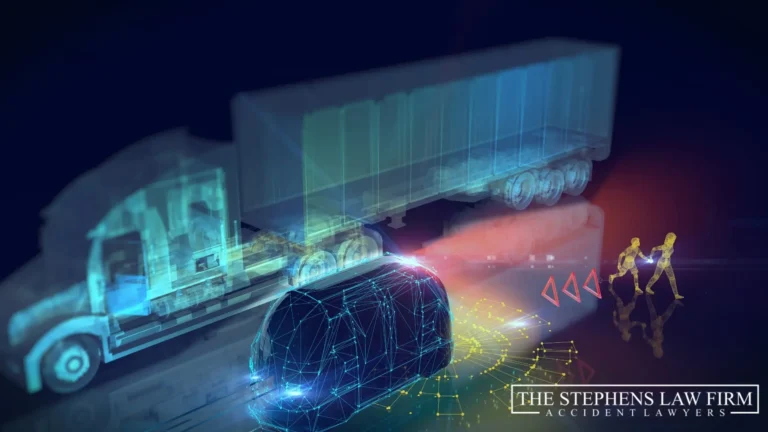
Self-driving trucks, also known as autonomous trucks, use top of the line technology to function. There is a computer installed directly into the truck, which is constantly performing a variety of calculations. The computer relies on sensors, cameras, radar to tell the computer how to drive.
This technology takes in all sorts of data, including real-time weather conditions. With all of these calculations, algorithms, and data, these trucks’ accuracy is shown to be fairly reliable.
While this technology is cutting edge, the autonomous trucks currently produced still require a human to be in the cab. It is unclear when driverless trucks will be able to function also without an occupant in the cab.
For now, we know that the first autonomous trucks will still have a human in the driver’s seat, even if they aren’t doing most of the driving.
Why Autonomous Trucks Are Safe
No matter what companies design, the federal government will decide what autonomous trucks can share the road. This should be the biggest reason for drivers to not fear the future of driverless trucks. Regulations like these can make sure that only those that meet standards will be able to hit the road.
In fact, some believe that driverless commercial trucks can be safer for drivers. With computers eliminating room for human error, this could lead to a decrease in truck accidents.
Fatigue, distraction, and even driving under the influence are often the contributing factors to truck wrecks. With calculations and algorithms unaffected by humans, we could have safer roads after all!

When self-driving technology fails, the consequences can be devastating — trust attorney Joe Stephens to hold the right parties accountable.
Aurora Innovation and the Texas Driverless Corridor
Texas has become the epicenter of the autonomous trucking revolution. Because our state regulations are among the most “tech-friendly” in the nation, companies like Aurora have moved their primary operations here.
Key Facts About Current Operations:
- The I-45 Route: Driverless trucks are currently completing up to 12 trips per day between terminals in Dallas and Northwest Houston.
- The Technology: The “Aurora Driver” system uses high-resolution cameras and LiDAR (laser scanning) to claim it can “see” objects up to 1,000 meters away, far beyond human vision.
- Major Partners: These trucks aren’t empty; they are hauling real freight for companies like FedEx, Uber Freight, and Werner Enterprises.
- Expansion Plans: By the end of 2025 and into 2026, these routes are expected to expand to El Paso and Phoenix, forming a continuous autonomous loop across the Sun Belt.
Texas Governor Greg Abbott endorsed the launch, stating that autonomous trucks on the I-45 corridor will “efficiently move products, create jobs, and help make our roadways safer.
Drivers Should Be Cautious of Self Driving Trucks
While human error may be absent from self-driving semi-trucks, truck crashes will not be. Factors such as sudden pedestrians, other vehicles’ behavior, and bad, unforeseen road conditions will not disappear.
Drivers should always remain on their guard to avoid an accident with a big truck. Crashes like these can result in disastrous injuries and damages and you may need an experienced Houston big rig wreck lawyer. Accidents involving big trucks are numerous, and we don’t know yet how self-driving trucks will affect truck wrecks.
Who Is Liable in a Self-Driving Truck Accident?
In a traditional wreck, we look for driver fatigue or distraction. But who do you sue when there is no driver? Liability in an autonomous crash shifts from “Driver Negligence” to “System Failure.”
Potentially liable parties in a driverless crash include:
- The Tech Provider (Aurora): If a software bug, algorithmic error, or sensor “blind spot” caused the crash.
- The Trucking Carrier: For failing to install critical software updates or ignoring sensor maintenance.
- The Manufacturer (PACCAR/Volvo): If a mechanical failure in the steering or braking system prevented the AI from avoiding the collision.
- Third-Party Maintenance: If a technician improperly calibrated the LiDAR or cameras during a routine service.
The Legal Challenge: Trucking companies will try to blame the “unpredictability” of human drivers. You need a lawyer who can subpoena the “Black Box” data and AI logs to prove the machine, not you, was at fault.
Because there is no human driver to hold accountable, victims of autonomous truck accidents need an attorney who understands both trucking regulations and emerging autonomous vehicle law.
Current Texas Regulations for Autonomous Vehicles
Texas has become a hub for autonomous vehicle testing and deployment due to its business-friendly regulatory environment. Texas law (specifically SB 2205) essentially treats an autonomous vehicle as its own “licensed driver.”
What you need to know about Texas AV laws:
- No Safety Driver Required: Unlike some states, Texas does not require a human to be physically present in the vehicle.
- Owner Liability: Under the Texas Transportation Code, the owner of the autonomous system is considered the “operator” for the purpose of traffic laws and accidents.
- Insurance Standards: These companies are required to carry significant insurance, but those limits are often tested in catastrophic multi-vehicle collisions.
As autonomous trucking expands, regulations may evolve. If you are injured in an accident involving a self-driving truck, contact a Houston truck accident lawyer who stays current on these developing laws.
Safety Concerns with Autonomous Trucks
While proponents argue that autonomous trucks could reduce accidents caused by human error, critics raise several concerns:
- Limited real-world testing in adverse weather conditions
- Questions about how the technology responds to unexpected situations
- Potential cybersecurity vulnerabilities
- Lack of human judgment in emergency situations
- Longer stopping distances for heavily loaded trucks traveling at highway speeds
The International Brotherhood of Teamsters has called for emergency legislation requiring human operators in autonomous trucks, citing both safety and employment concerns.
If you are injured in a crash involving a self-driving truck, Joe Stephens can investigate the accident and identify all potentially liable parties.
Call an Experienced Truck Accident Lawyers in Houston
If you or a loved one has been involved in a big truck accident, we can help. Call the best automobile collision attorneys in Houston. We are experts in big rig accidents, and we want to carry out your case.