
After a car accident in Texas, fault determines who pays for the damages and how much compensation you can recover. Establishing who is responsible isn’t always simple, especially under Texas’ comparative fault laws, where even partial blame can reduce your recovery. If you’re struggling to understand your rights after a crash in Houston, Katy, or anywhere in the state, Texas car accident lawyer Joe Stephens can help. With over 40 years of experience, Joe and The Stephens Law Firm have guided countless Texans through the process of proving fault and securing the compensation they deserve.
KEY TAKEAWAYS
- Texas follows a modified comparative negligence rule, meaning your compensation is reduced by your percentage of fault.
- Fault is proven by showing negligence through four elements: duty of care, breach, causation, and damages.
- Evidence like police reports, witness statements, dashcam footage, and accident reconstruction is critical in determining liability.
- You have two years from the accident date to file a personal injury claim in Texas, so acting quickly with Joe Stephens helps protect your rights and recovery.
How Texas Comparative Negligence Laws Affect Car Accident Fault
Texas follows an at-fault system, meaning the driver who causes the crash is responsible for paying damages. However, Texas also uses a modified comparative negligence rule, which divides fault between everyone involved. Under this rule, your compensation is reduced by your percentage of fault, and if you’re found more than 51 percent responsible, you can’t recover any damages at all.
Insurance companies often use this rule to their advantage, arguing that you were partly to blame to minimize or deny your payout. That’s why having an experienced attorney matters. Texas car accident lawyer Joe Stephens carefully investigates every detail of the crash, protects your rights, and fights to ensure you receive the full compensation you deserve under Texas comparative negligence laws.
How Fault Is Determined in a Texas Car Accident
To determine fault after a car accident in Texas, investigators and courts rely on the legal concept of negligence, or proving that someone failed to act responsibly and caused harm as a result. This process helps determine who is at fault in a multi-car accident and who is legally responsible for covering damages through Texas car accident compensation.
The four elements of negligence include:
- Duty of Care: Every driver has a legal duty to operate their vehicle safely, follow traffic laws, and avoid putting others in danger.
- Breach of Duty: A driver breaches that duty when they act carelessly or break the law, such as speeding, texting while driving, or running a red light.
- Causation: There must be a direct link between the driver’s actions and the accident. In other words, their negligence must have caused the crash.
- Damages: The injured person must have suffered real losses, such as medical bills, lost income, or pain and suffering, due to the accident.
Proving these elements can be challenging, especially when multiple drivers share fault. Joe Stephens builds strong, evidence-based cases to protect your rights and help you recover the compensation you deserve.
Key Evidence Used to Determine Fault in a Texas Car Accident
Fault in a Texas car accident is determined by reviewing the evidence and applying state traffic laws to identify who caused the crash and how much compensation is owed.
The Police Report
A police report includes details about the scene, driver statements, traffic citations, and the officer’s opinion on who may be at fault. Insurance companies and courts often rely on these findings when assigning liability.
Witness Statements
Neutral eyewitness accounts help clarify what happened before, during, and after the collision, especially when the drivers’ stories conflict.
Accident Scene Conditions
Skid marks, vehicle positions, debris patterns, and weather conditions all help reconstruct what happened. Photos and videos taken right after the crash can preserve these critical details before they disappear.
Insurance Company Investigations
Insurers investigate crashes to decide liability and payouts, often prioritizing their bottom line, which is why legal representation is so important to ensure your rights are protected.
Traffic Laws
Texas traffic laws are often central in determining fault. Some notable laws include:
- Prohibiting texting while driving – Transportation Code §545.4251
- Running red lights – Transportation Code §544.007
- Speeding – Transportation Code §545.351
Expert and Accident Reconstruction Evidence
Accident reconstructionists and other experts use physics, vehicle data, and scene analysis to explain how and why the crash occurred.
Dashcam Footage
Video from dashcams or nearby surveillance cameras offers objective proof of how events unfolded. It can confirm or contradict statements and serves as persuasive evidence of fault.
Statements From Both Parties Involved
What you say after an accident matters. All drivers’ statements can influence how fault in a car accident is assigned. It’s best to speak carefully and let your attorney handle communications to avoid misunderstandings.
Evidence can make or break your case. Joe and The Stephens Law Firm protect clients from insurance adjusters who prioritize their company’s bottom line over your recovery, helping ensure you are fairly compensated for lost wages, medical bills after an accident, and other damages.
Common Texas Car Accident Types and How Fault May Be Assigned
Every crash is different, but Texas law provides clear guidance on how fault is typically assigned in specific accident scenarios.
- Rear-End Collisions
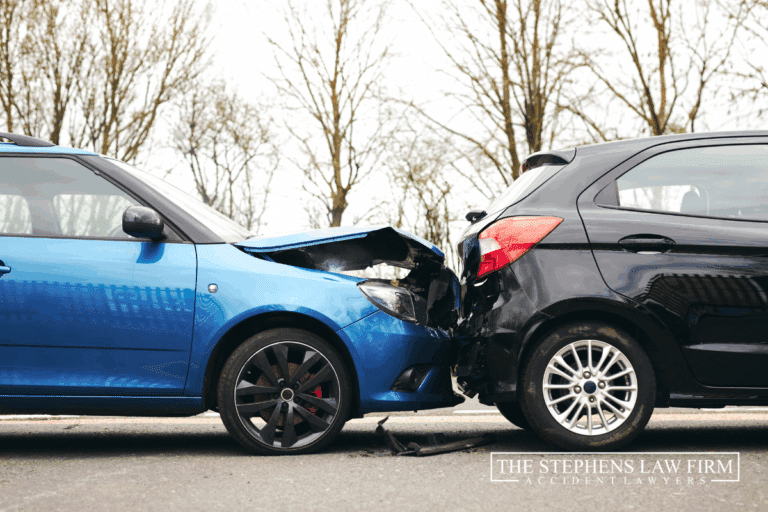
Rear-end crashes are one of the most common types in Texas. The driver in the back is usually at fault under Texas Transportation Code §545.062, which mandates keeping a safe distance. If the front driver stopped suddenly or had broken brake lights, fault may be shared. - Intersection Crashes
T-bones and red-light accidents occur when a driver runs a red light or fails to yield at an intersection. The driver who failed to follow traffic protocol is usually at fault under Texas Transportation Code §544.007. In some cases, both drivers share responsibility, such as when someone speeds through a yellow light or turns without looking. - Multi-Vehicle and Chain-Reaction Crashes
Complex collisions often happen on congested highways like I-10 or I-45. The driver who caused the first impact is typically at fault, but other drivers may share blame if they were following too closely or failed to brake in time. - Left-Turn Accidents
Drivers turning left must yield to oncoming traffic under Texas Transportation Code §545.152. If they fail to brake, they are usually held responsible, although fault can shift if the oncoming driver was speeding or ran a red light.
Texas Car Accident Claim Deadlines
Texas typically provides two years from the date of your accident to file a personal injury claim. This time limit applies whether the crash caused minor injuries or major losses. Missing this deadline typically prevents you from receiving compensation.
While some symptoms are delayed, this does not extend the filing deadline. Acting quickly allows your attorney to gather evidence, contact witnesses, and build a strong case while the details are still fresh.
Texas Car Accident Fault FAQs
What Happens if the At-Fault Driver Is Uninsured or Underinsured in Texas?
If you don’t have insurance and get into a car accident in Texas, you could be held personally liable for damages. If the driver who caused the crash doesn’t have insurance, your uninsured or underinsured motorist coverage can help pay for your medical expenses and property damage.
What Should I Do if I Disagree with the Insurance Company’s Fault Determination?
If you believe the insurer’s fault decision is wrong, Joe Stephens can help you challenge it by presenting strong evidence like dashcam footage or expert analysis to protect your right to compensation.
What Types of Damages Can I Claim in a Texas Car Accident?
You may recover compensation for medical bills, lost wages, property damage, and pain and suffering. Additional damages may apply if the other driver acted with extreme negligence, such as drunk or reckless driving.
Contact Our Experienced Texas Car Accident Lawyer for a Free Consultation
When you’ve been injured in a car accident, experience and personal attention make all the difference. For over 40 years, Joe Stephens has earned a reputation for delivering life-changing case results through skill, integrity, and dedication. As a double board-certified attorney, Joe personally manages every case, providing the one-on-one attention clients deserve.
If you’ve been injured in a car accident in Texas, contact us today. Call us at (281) 201-0035 for your free, no-obligation consultation. There are no legal fees unless Joe wins your case, so you can focus on healing while Joe and The Stephens Law Firm fight for the justice and compensation you deserve.


