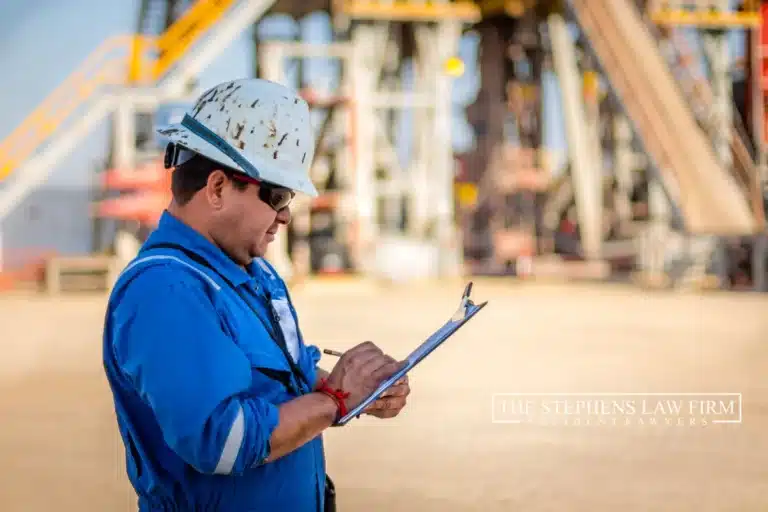
Oil field work is one of the most dangerous jobs in Texas. Workers face heavy machinery, high-pressure equipment, toxic chemicals, and elevated work environments every single day. When something goes wrong, the injuries are rarely minor.
Joe Stephens knows this industry from the inside. Before becoming an attorney, he worked on oil fields in Oklahoma to put himself through school. That experience shapes how he approaches every case. If you were hurt on the job at an oil field, a Texas work injury lawyer can help you understand what your options are.
KEY TAKEAWAYS
- Texas leads the nation in oil field injuries and deaths, with active drilling sites across Harris County communities including Humble, Highlands, Crosby, and La Porte.
- The most serious oil field injuries – burns, traumatic brain injuries, amputations, and spinal damage – are often the result of preventable equipment failures and safety violations.
- Liability in an oil field injury case can extend beyond your direct employer to include contractors, equipment manufacturers, and site operators.
Top Five Common Texas Oil Field Injuries
Oil fields across Texas, from the Permian Basin to the refineries and drilling sites near Houston in communities like Humble, Highlands, Crosby, and La Porte, expose workers to a specific set of serious injury risks. Based on Occupational Safety and Health Administration Severe Injury Report data, at least 36 oil and gas–related severe injuries were reported in Texas between January and April 2025. These reports reflect incidents involving hospitalization, amputation, or eye loss and provide a useful snapshot of the types of injuries oil field workers face most often. The following are among the most common and most serious injuries seen in Texas oil field incidents.
Burn Injuries
Burns are among the most devastating oil field injuries. They occur in explosions, well blowouts, flash fires, and chemical spills. Oil and gas sites contain highly flammable materials under extreme pressure, and a single equipment failure or safety violation can result in third-degree burns covering large portions of a worker’s body. Recovery is long, painful, and often incomplete. Workers who suffer serious burn injuries frequently face multiple surgeries, skin grafts, and permanent scarring that affects both their ability to work and their quality of life.
Traumatic Brain Injuries
Falling objects, swinging equipment, and falls from elevated platforms are a constant hazard on drilling rigs. A worker can be struck by a falling pipe or piece of machinery, or lose footing on a wet or unstable surface and fall from significant height. The result is often a traumatic brain injury that may not be immediately obvious but can produce lasting cognitive, emotional, and physical impairment. TBIs are frequently underdiagnosed in the immediate aftermath of an oil field accident, which is one reason prompt medical evaluation matters so much.
Back and Spinal Cord Injuries
The physical demands of oil field work, combined with fall risks and the force of equipment-related accidents, make back and spinal injuries extremely common. These range from herniated discs and fractured vertebrae to partial or complete spinal cord damage. Workers who suffer back and spine injuries on oil fields often face permanent limitations in mobility and a complete change in their ability to earn a living.
Amputations and Crush Injuries
According to OSHA, three out of every five oil field injuries involve a worker being crushed, struck by, or caught between objects. Rotating equipment, heavy machinery, and high-pressure lines create constant hazards for hands, fingers, arms, and legs. Amputations are among the most frequently reported severe injuries in Texas oil field OSHA reports. These injuries are life-altering and, in many cases, the result of equipment that was not properly maintained or guarded.
Chemical Exposure and Respiratory Illness
Oil field workers are regularly exposed to hydrogen sulfide, silica dust, benzene, and other toxic substances. Silica exposure during hydraulic fracturing operations is a well-documented hazard that can cause silicosis, an irreversible and potentially fatal lung disease. Hydrogen sulfide can incapacitate a worker within seconds at high concentrations. The long-term health consequences of chemical exposure often take years to fully surface, which can complicate both the medical and legal picture for affected workers.

Accidents happen—but that doesn’t mean you have to face the aftermath alone. Attorney Joe Stephens will walk you through your options and handle the hard stuff so you can focus on getting better.
Common Causes of Texas Oil Field Injuries
Knowing what type of injury a worker suffered is only part of the picture. Understanding how these injuries happen matters just as much, because it determines who is responsible.
The most common causes of oil field injuries in Texas include:
- Equipment failure and poor maintenance. Drilling rigs, pumps, valves, and pressure lines require consistent upkeep. When maintenance is deferred or safety checks are skipped to meet production deadlines, the risk of mechanical failure increases significantly.
- Explosions and well blowouts. Volatile hydrocarbons and high-pressure systems create constant explosion risk. OSHA documented more than 60 workers killed in oil and gas explosions between 2013 and 2017, and these incidents continue to occur.
- Falls from elevated work areas. Rig platforms, derricks, ladders, and scaffolding put workers at heights where a fall without proper protection can be fatal or result in permanent disability.
- Struck-by and caught-between accidents. Falling pipe, swinging crane loads, and moving mechanical components can strike workers with tremendous force. High-pressure lines that detach under load are a well-documented and particularly dangerous hazard.
- Vehicle accidents on site. Oil field sites involve constant truck and equipment traffic. Collisions involving work vehicles on site are a leading cause of fatalities in the industry.
- Hazardous working conditions and ignored safety violations. Texas private employers recorded 172,800 nonfatal workplace injuries in 2024, according to the Texas Department of Insurance. When companies prioritize production over safety protocols, workers bear the consequences of shortcuts that lead to preventable accidents.
Steps To Take Following an Oil Field Accident
What you do in the hours and days after an oil field accident can directly affects your health and ability to recover compensation. These steps matter.
- Get medical attention right away. Even if you feel able to push through, some of the most serious injuries, including traumatic brain injuries and internal damage, are not immediately obvious. Being evaluated promptly creates a medical record that connects your injuries to the accident.
- Report the accident to your employer in writing. Verbal reports can be disputed or go undocumented. A written report creates a record that the incident occurred and when.
- Document everything you can. Photographs of the scene, the equipment involved, and your injuries are valuable. If coworkers witnessed the accident, write down their names and contact information.
- Do not give a recorded statement to the company’s insurance adjuster. Adjusters work for the insurer, not for you. Statements made before you have legal guidance can be used to limit or deny your claim.
- Contact a lawyer before accepting any offer. Texas’s personal injury statute of limitations gives most workers two years from the date of the accident to file a claim, but acting quickly protects evidence and gives your attorney the strongest possible foundation to build your case.
Who May Be Liable for an Oil Field Injury
One of the most important and most misunderstood aspects of an oil field injury case is that liability rarely stops with your direct employer.
Oil field operations involve layered relationships between operators, drilling contractors, service companies, and equipment manufacturers. And under OSHA’s Multi-Employer Citation Policy, multiple parties can be held responsible for a single hazard, including:
- The site operator who controls working conditions
- A contractor whose crew created the hazard
- An equipment manufacturer whose product was defective
- Maintenance company whose failures contributed to the accident.
Building these cases requires records from multiple parties: safety logs, maintenance records, contractor agreements, and inspection reports. If an oil field accident results in a death, the family may also have a wrongful death claim against one or more of these parties.
Speak With a Texas Oil Field Injury Lawyer
An oil field injury can upend your life overnight. Lost income, mounting medical bills, and the uncertainty of what comes next are an enormous weight to carry, especially when the company that put you at risk is already working to protect itself.
Joe Stephens has over 40 years of experience representing injured workers in Texas. He personally handles every case from investigation through resolution, which means he is the one identifying liable parties, building the evidence, and negotiating with insurers on your behalf. He takes cases he is prepared to take to trial, and the companies he goes up against know it.
If you or a family member was injured in an oil field accident anywhere in Texas, contact The Stephens Law Firm for a free consultation. There are no upfront fees. Joe only gets paid if he wins your case.
Call (281) 201-0035 or contact us online.